


Day 3: Planning Investigations and Dismantling Human Trafficking Networks

Day 3 of UNAFRI's Capacity Building Training on Human Trafficking for the Uganda Police Force CID focused on planning and managing trafficking investigations, coordinating the identification and protection of victims, tracing illicit financial proceeds, investigating cyber-enabled trafficking and using intelligence to dismantle organised criminal networks.
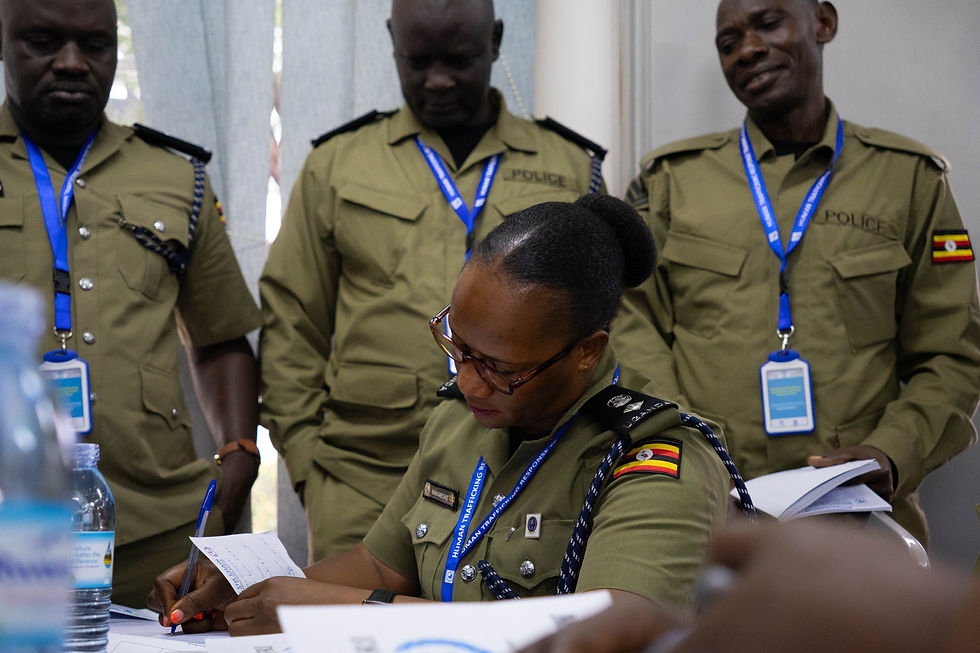
The day's sessions were facilitated by ACP Taremwa Moses; CP Julius Twinomujuni, Commissioner of the Coordination Office for the Prevention of Trafficking in Persons (COPTIP); Onyait Benard and Allan Kaganzi of the Financial Intelligence Authority; CP Lydia Kantono; and Dr Maureen Mapp of the University of Birmingham. An anonymous survivor also shared her lived experience of trafficking.
Planning and managing trafficking investigations
ACP Taremwa Moses guided participants through the planning and management of trafficking investigations. The session considered how investigators could organise inquiries, coordinate the identification and protection of victims and maintain a clear operational focus from the first report through the later stages of a case.
Participants examined the need to coordinate investigative action with victim referrals and protection measures. This approach recognises that obtaining evidence and safeguarding victims are connected responsibilities, particularly where victims face intimidation, trauma or continuing control by traffickers.

Responding to changing recruitment methods
CP Julius Twinomujuni, Commissioner of COPTIP, facilitated a session on the changing nature of trafficking in persons. He explained that recruitment has largely shifted online, giving traffickers new ways to contact and mislead potential victims across borders.
The session also drew attention to cases in which victims travel using genuine passports and visas before they are exploited, including in scam operations. These patterns can make trafficking harder to identify at the point of travel because the documents and routes may appear lawful even when the recruitment process is deceptive and the intended exploitation is criminal.
For investigators, the changing methods require attention to the full trafficking process. Recruitment messages, travel arrangements, the relationship between recruiters and facilitators, and the circumstances awaiting a person at the destination can all help reveal exploitation that may not be evident from travel documents alone.
Investigating cyber enabled trafficking
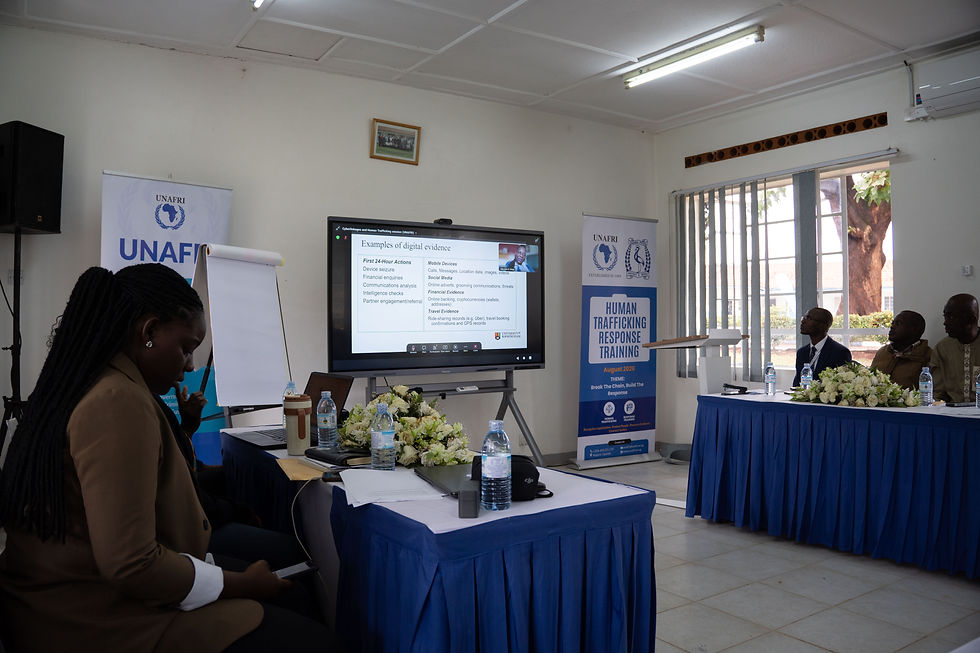
Dr Maureen Mapp of the University of Birmingham joined the training remotely from the United Kingdom to deliver her session on cyber-enabled trafficking. Participants considered how digital platforms and communications can support recruitment, coordination and exploitation, and why investigators need to recognise the online elements of conduct that may extend across several jurisdictions.
The session reinforced the importance of preserving relevant digital information and connecting online activity to the wider investigation. Digital evidence can help establish relationships among suspects, identify recruitment methods and reveal links between activity occurring in different locations.

Following the financial networks behind trafficking
Onyait Benard and Allan Kaganzi of the Financial Intelligence Authority facilitated a session on Financial Investigations and Money Laundering: Proceeds of Trafficking in Persons and Smuggling of Migrants. They examined trafficking in persons as a profitable form of organised crime that depends on financial networks.
Financial investigation can complement victim interviews and other evidence by helping investigators identify how criminal proceeds are received, moved and concealed. Examining the financial dimension can also point beyond an individual suspect to recruiters, facilitators and other people who benefit from the offence.
The discussion highlighted the value of cooperation between trafficking investigators and the Financial Intelligence Authority. Timely exchange of relevant information can help connect transactions to suspected trafficking activity and develop a clearer picture of the network behind a case.

Using intelligence to dismantle criminal networks
CP Lydia Kantono contributed to the day's focus on intelligence-led investigations. Participants examined how intelligence could help identify connections among recruiters, transporters, facilitators and beneficiaries, allowing investigators to look beyond individual incidents and target the wider organised criminal network.
The session connected information gathering, analysis and inter-agency cooperation with the practical work of disrupting trafficking operations. Intelligence-led action can help investigators recognise patterns across cases and direct resources towards the people and structures responsible for organising exploitation.
Placing survivor dignity at the centre
An anonymous survivor shared her lived experience with participants. Her contribution brought the human consequences of trafficking into the training room and reinforced the importance of listening to survivors without exposing them to further harm.
The testimony emphasized that investigations should protect survivors' dignity, safety and access to justice. A victim-centred approach also requires investigators to understand the pressures that may affect disclosure, cooperation and recovery, and to avoid practices that could cause re-victimisation.

Connecting evidence protection and intelligence
Together, the Day 3 sessions connected operational planning, victim protection, cyber-enabled recruitment, financial investigation and intelligence analysis. Participants considered how each element could contribute to evidence that identifies offenders while protecting the people affected by trafficking.
Through the day's sessions, officers strengthened their understanding of how to manage complex trafficking investigations and coordinate action against organised criminal networks. The training continued UNAFRI's work to strengthen the capacity of Member States to prevent trafficking, protect victims and improve criminal justice responses.


Comments