


Day 2: Strengthening Human Trafficking Investigations and Victim Protection
Updated: Aug 16
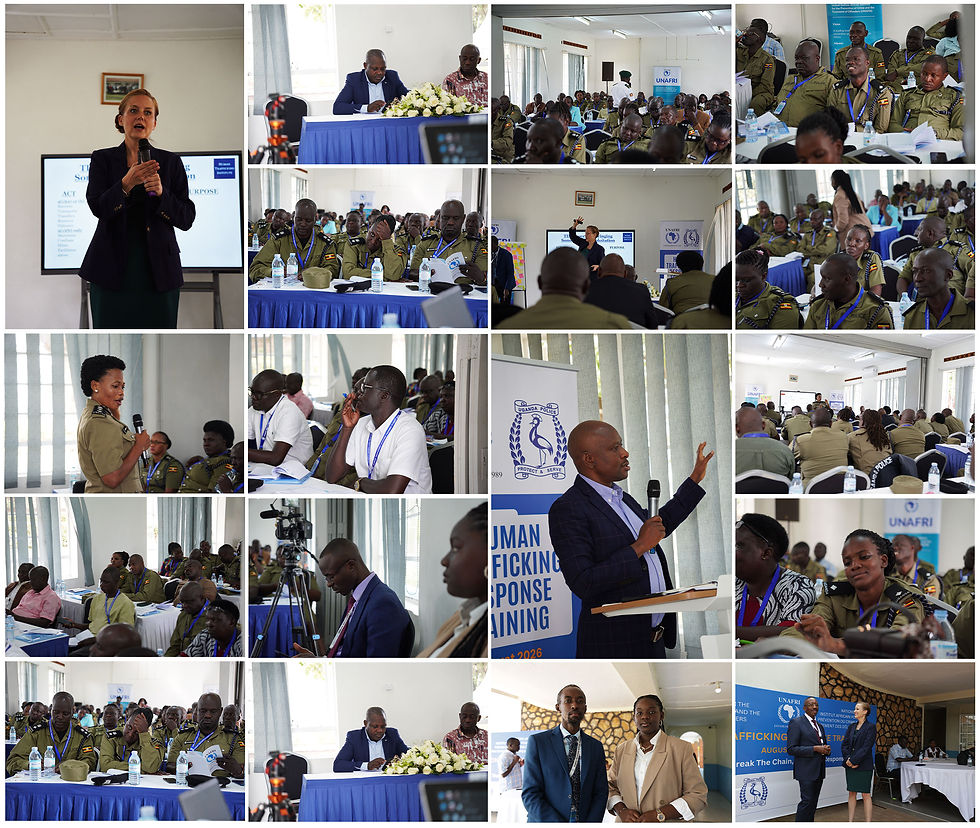
Day 2 of UNAFRI’s Capacity-Building Training on Human Trafficking for the Uganda Police Force focused on interviewing victims, investigating trafficking offences, strengthening national cooperation and building cases capable of supporting successful prosecutions.
The day’s sessions were facilitated by ACP Odong Mark and SSP Rose Asiimwe of the Uganda Police Force; Gabby Massey, Country Director of the Human Trafficking Institute; Mr. Basalirwa Kigenyi of the Coordination Office for the Prevention of Trafficking in Persons (COPTIP), Ministry of Internal Affairs; and SP William Ayaregah, Director of the Anti-Human Trafficking Unit, CID, Ghana Police Service.
Interviewing victims and witnesses

ACP Odong Mark and SSP Rose Asiimwe facilitated a session on interviewing victims of trafficking in persons. They guided participants through the basic principles of interviewing victims, witnesses and children while taking account of their vulnerability and protection needs.
The session reinforced the importance of conducting interviews sensitively and obtaining reliable information without causing further harm or distress to victims.
Adopting the right investigative approach
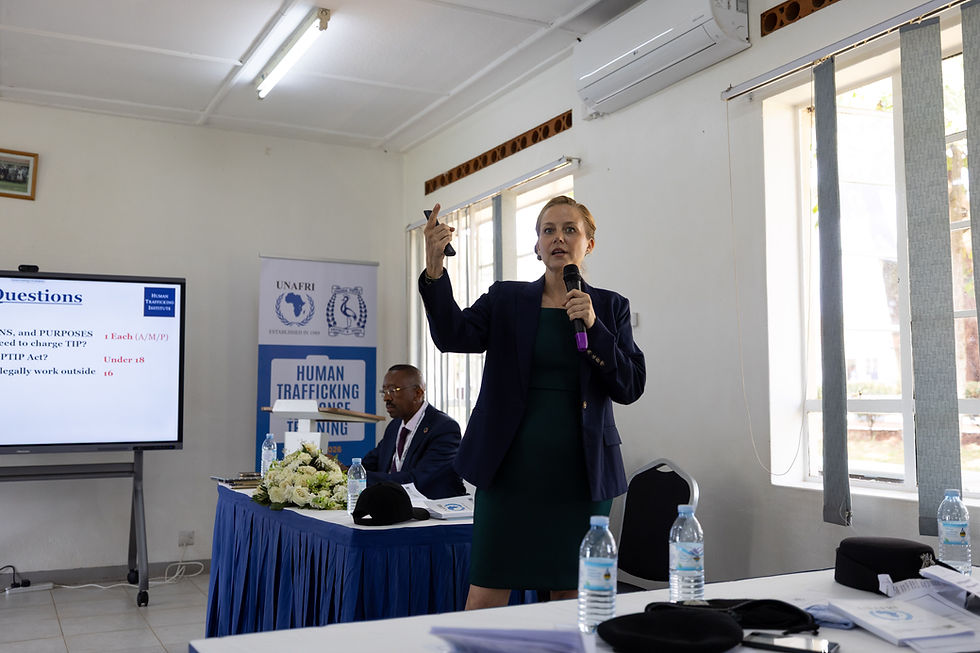
Gabby Massey guided participants through the elements that constitute trafficking in persons and the smuggling of migrants and how these could inform investigations.
She emphasized that human trafficking investigations required a different mindset from investigations into many other crimes. Trafficking cases could be prosecuted before the intended exploitation was fully completed because the law recognized the harm caused by the trafficking process itself.
She also stressed that culture could not be used to justify exploitation or abuse. Customs, beliefs and traditions did not provide a defence for conduct amounting to human trafficking.
Strengthening national cooperation

Mr. Basalirwa Kigenyi of COPTIP, Ministry of Internal Affairs, facilitated a session on national cooperation in the investigation and prosecution of trafficking cases.
The session examined Uganda’s National Action Plan, the roles of different stakeholders and the National Referral Mechanism for managing trafficking cases. Participants considered how effective coordination among law-enforcement agencies, prosecutors, government institutions and victim-support organizations could improve investigations, referrals and victim protection.
Practical lessons from Ghana

SP William Ayaregah shared practical lessons from Ghana’s response to trafficking in persons. He highlighted the importance of community engagement and public awareness, intelligence-led rescue operations and victim-centred approaches that prioritized protection, care and reintegration.
Participants also examined emerging threats, including cyber-enabled human trafficking, and the importance of adapting investigative approaches to the changing methods used by traffickers.
Building cases that withstand prosecution
The Day 2 sessions emphasized that successful prosecutions began long before a case reached the courtroom. Investigators needed to gather quality evidence, prepare comprehensive case files and avoid evidential gaps that could weaken prosecutions.
Participants were also encouraged to follow financial trails to identify and dismantle trafficking networks. Strong multi-agency cooperation remained essential to improving prevention, investigations, victim protection and the prosecution of perpetrators.
Through these sessions, participants strengthened their understanding of the investigative, evidential and victim-centred approaches required to respond effectively to human trafficking.


Comments